
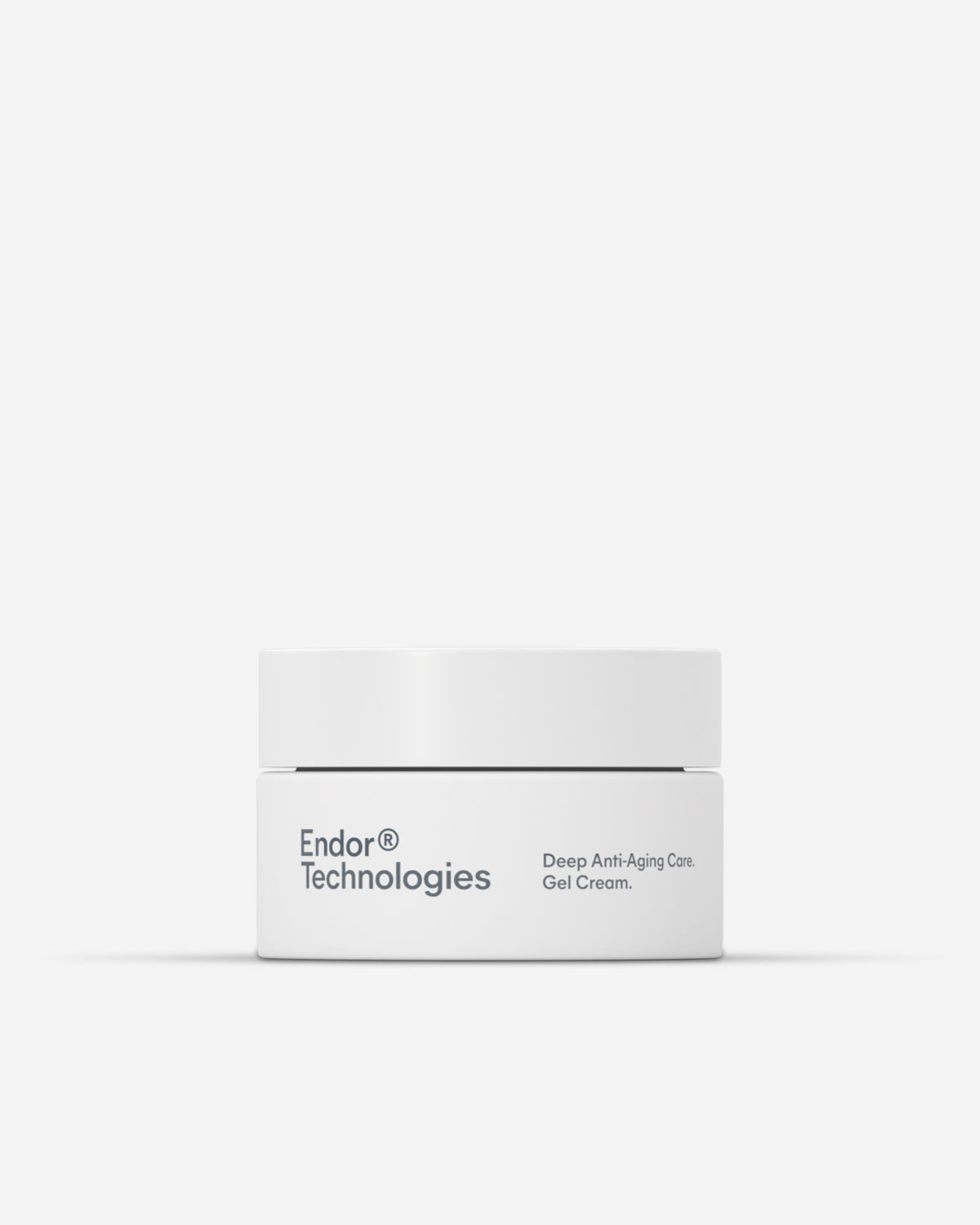

Gel Cream
Nasolabial folds, barcode lines, marionette lines, sagging cheeks. Four names for the same condition.
When the skin loses its firmness, it’s not just one problem that arises. Instead, a whole range of issues emerge, one after another, over time. Gel Cream doesn’t treat each one separately. It addresses the underlying cause.
Effectiveness depends not only on the active ingredients but also on whether they reach their intended destination. This is studied in medicine but hardly at all in cosmetics.
Gel Cream is more than just a cream—it’s an active ingredient delivery system. A network of biomimetic liquid crystals transports highly effective protein fractions and releases them upon contact with the skin, allowing them to reach living cells—the very cells that produce the proteins that support and firm your skin.
With 9% lipid content, this cream is ideal for normal to oily skin.
50 ml.
How to use it
Morning and night.
- Apply to clean, dry skin. If you use a serum, apply the serum first, followed by the cream. A small amount is enough for your face and neck.
- Apply it with a gentle massage. As you massage, you'll notice that the cream releases water: this is part of the active ingredient delivery system. The skin absorbs it without leaving any residue.
- You don't need to apply another moisturizer on top: Gel Cream provides deep hydration and anti-aging firming treatment in a single step.
Actives and ingredients
-Cell repair protein fractions: improve the cell's internal physiology without causing stress or microinflammation. They increase the production of structural proteins to firm the skin.
- Biomimetic liquid crystals: deliver active ingredients deep into the skin.
- Osmolytes: betaine and trehalose. They maintain high hydration levels to provide the cell with an optimal environment in which to function.
- Ectoine: firming and moisturizing.
- Panthenol: reduces inflamaging and supports the skin's barrier function.
- Squalane: a natural lipid that acts as a powerful moisturizer and antioxidant, repairing the skin barrier and softening the skin without leaving a greasy feeling.
Ingredients: Aqua / Water, Glycerin, Pentylene Glycol, PEG-100 Stearate, Glyceryl Stearate, Cetearyl Alcohol, Isononyl Isononanoate, Dibutyl Adipate, Ethoxydiglycol, Caprylic/Capric Triglyceride, Phenoxyethanol, Squalane, Sodium Polyacrylate, Hydrogenated Polyisobutene, Propanediol, Ethylhexyl Stearate, Ectoin, Panthenol, Tocopherol, Ethylhexylglycerin, Phytic Acid, Trideceth-6, Fragrance, Helianthus Annuus Seed Oil, Sodium Hydroxide, Hydroxypropyl Cyclodextrin, Linalyl Acetate, Hexamethylindanopyran, Palmitoyl Tripeptide-5, Tetramethyl Acetyloctahydronaphthalenes, Dimethyl Phenethyl Acetate, Palmitoyl Tripeptide-38.
Choose options

↳ Increased levels of structural proteins in a skin sample.
What changes with use
- Firmer, more toned skin. That’s the main effect—and the one you’ll notice most when you look in the mirror.
- Nasolabial folds, marionette lines, barcode lines, forehead wrinkles, and expression lines lose their depth simultaneously.
- Deep hydration, not just surface-level. The skin better retains its own moisture.
When do you start to notice the effects of
? The first signs appear between the 2nd and 3rd week. Visible changes become apparent after 6–8 weeks. The improvement continues beyond that point: it is a physiological effect.
What it doesn't do
- It does not replace sunscreen, which remains essential for preventing the damage that causes the problem.
- The cream visibly reduces the signs of sagging skin, but completely eliminating them may require medical treatment.
How it works
The problem.
Improving skin firmness is one of the most difficult results to achieve.
To achieve this, modern dermatology aims not only to firm the dermis by stimulating collagen production, but also to strengthen the bond between the outer layer—the epidermis—and the dermis to help keep the skin in place.
For a cream to be able to do something like that on real skin, it has to be able to deliver the active ingredients to where they need to work.
The solution.
Gel Cream is what is known in medicine as a delivery system. The cream carries protein fragments deep into the skin, and once they reach the cells, they trigger internal repair signals. They do not force or inflame the skin; rather, they improve its internal physiology.
And the cell responds by increasing the production of collagen, elastin, laminin, and fibronectin— the four proteins that improve firmness and strengthen the dermis-epidermis junction.
↳ Looking at the cream to see the biomimetic liquid crystals. IRB laboratory.
Biotechnology in cosmetics.
At Endor, we conduct biomedical research in oncology and regenerative medicine.
Our expertise in medical research provides us with the tools that, when applied to skincare, deliver results that surpass medical efficacy tests such as biopsies or ultrasounds—far exceeding those of cosmetic tests.
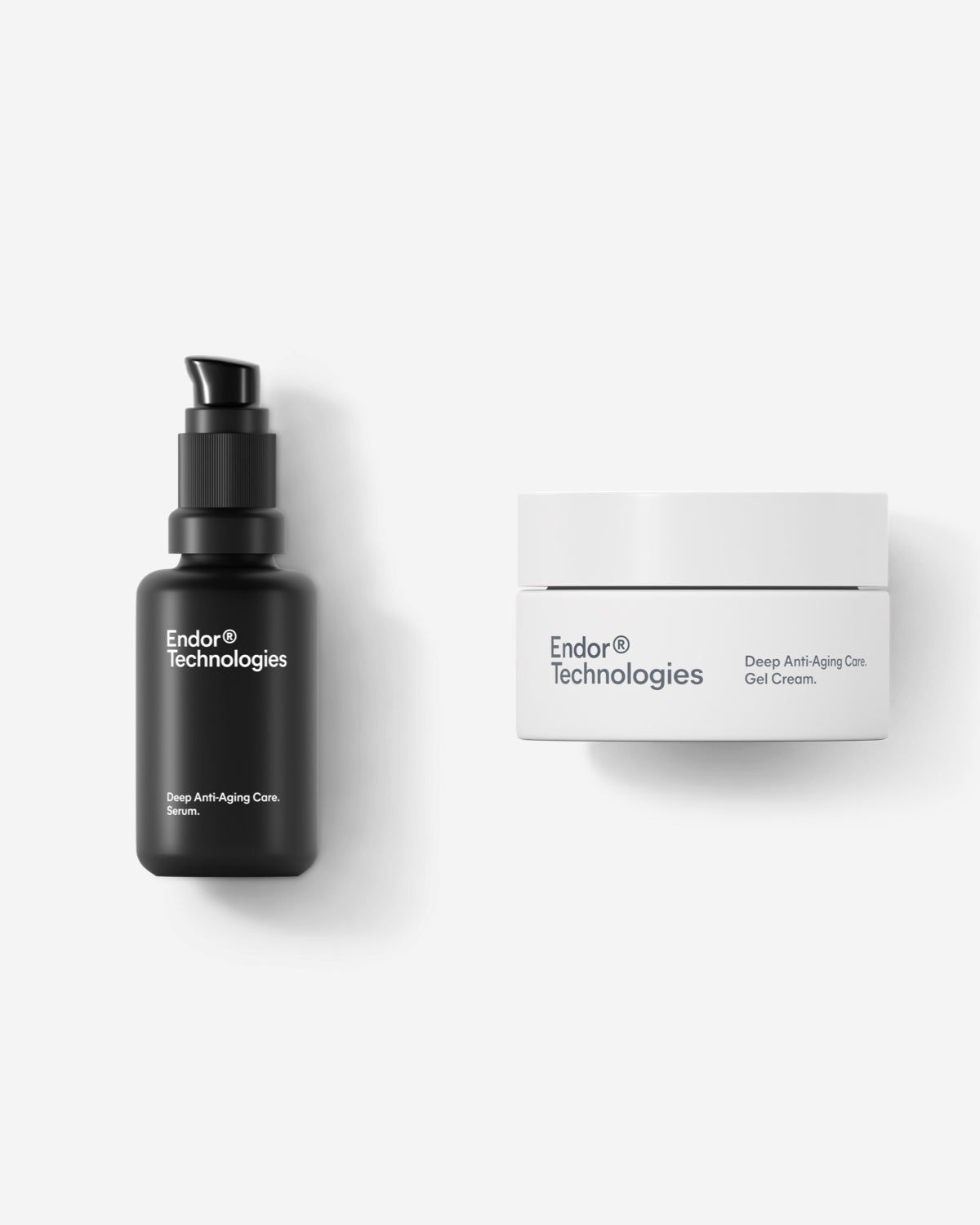
The treatment targets the two biological pathways that enhance skin firmness: the production of structural proteins (Gel Cream) and, once produced, their maturation to ensure they become fully functional (Proteomic Serum).
Both products work perfectly well on their own. But when used together, they work in synergy to deliver optimal results for oily, combination, or normal skin.
Frequently Asked Questions
Gel Cream is designed to reduce loss of facial firmness and soften its effects, such as nasolabial folds, forehead wrinkles, expression lines, marionette lines, and barcode lines.
You should choose this product if you have oily or combination skin, as it contains less than 8% lipids.
The cream has no effect on blemishes.
If you have rosacea, dermatitis, acne or any other dermatological condition, it is advisable to consult your doctor before trying any cosmetic, this or any other.
It is best to use the cream both day and night to get the most out of it. If you use a face mask at night, there is no need to apply the cream as well.
Yes, as long as the product is a serum—preferably liquid rather than creamy.
Our formulas are designed to help the active ingredients penetrate the skin, so we do not recommend combining them with other products. It is best to finish the products you are currently using and then start our treatment.
It is a common misconception to think that more products mean greater effectiveness, when in fact the opposite is usually true.
Yes. The cream should be used with Proteomic Serum if your main goal is to reduce sagging and its visible signs.
But if you want to combine the firming effect of the cream with the brightening and skin-evening benefits of the vitamin C serum, you can do so, since their formulas are compatible.
The cream does not contain sunscreen and is not intended to replace sunscreen.